
Not every dirty exterior surface should be cleaned with the same method.
Pressure washing and soft washing are both effective ways to clean a property, but they work differently. Pressure washing relies more heavily on controlled water pressure to remove dirt and grime. Soft washing uses lower pressure and cleaning solutions to break down contaminants before they are rinsed away.
For Southern California homeowners, knowing which method suits a particular surface can make a big difference. A concrete driveway can usually handle a much more aggressive cleaning process than stucco, painted siding, or a roof. Using the wrong technique can lead to surface damage, uneven results, or a cleaning job that looks good temporarily but does not properly address the buildup.
So which method should you choose?
It depends on what you are cleaning.
What Is Pressure Washing?
Pressure washing uses pressurized water to remove dirt, grime, stains, and other contaminants from exterior surfaces.
It is particularly useful for hard, durable areas where surface buildup has become difficult to remove through ordinary washing.
Common applications include:
- Driveways
- Concrete sidewalks
- Patios
- Garage floors
- Some masonry surfaces
- Other hard outdoor areas with heavy surface buildup
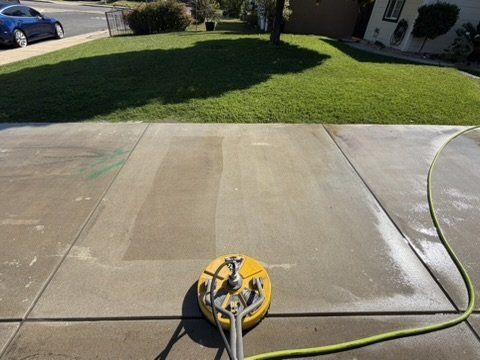
A dirty driveway is a good example. Concrete can collect dust, tire marks, mud, leaf debris, grease, and years of general grime. A controlled pressure-washing process can break that material loose and leave the surface looking significantly cleaner.
The important word is controlled.
More pressure does not automatically produce a better result. The correct pressure depends on the material, surface condition, type of contamination, and cleaning equipment being used.
A professional technician may adjust the pressure, nozzle, distance, and cleaning technique throughout the job instead of using one setting on the entire property.
What Is Soft Washing?
Soft washing takes a different approach.
Instead of depending primarily on high water pressure, soft washing combines lower pressure with a cleaning solution designed to loosen and break down contaminants. The solution does much of the cleaning work, while the final rinse removes the residue.
This makes soft washing useful for surfaces that may not respond well to aggressive pressure.
It is often considered for:
- Stucco
- Painted exterior areas
- Delicate siding
- Certain exterior finishes
- Surfaces affected by algae, mold, mildew, or other organic growth
The goal is not to blast the surface clean. The goal is to address the contamination while putting less mechanical stress on the material.
For the right surface, that can be a much safer and more effective approach.
Why Southern California Homes Need Different Cleaning Methods
Southern California properties deal with a combination of environmental conditions that can leave exterior surfaces dirty throughout the year.
Dry weather allows dust and airborne debris to settle on driveways, walls, patios, and other outdoor areas. Traffic can add tire residue and vehicle grime to concrete. Landscaping can leave behind leaves, pollen, and organic material. Irrigation overspray can also contribute to mineral residue on certain surfaces.
Some properties have shaded areas that stay damp longer than exposed sections. That can encourage green growth, mildew, or dark organic staining.
A single home can therefore have several different cleaning problems at the same time.
For example, a property might have:
- A heavily soiled concrete driveway
- Dusty front walkways
- Green buildup on a shaded stucco wall
- Organic staining on the roof
- A patio with embedded dirt and leaf residue
Using the same cleaning process on every one of those surfaces would not make much sense.
When Pressure Washing Is the Better Choice
Pressure washing is often the better option for surfaces that can tolerate controlled water pressure.
Concrete is one of the most common examples.
When a driveway becomes dark and dirty, pressure washing can remove layers of surface buildup that a garden hose cannot handle. Walkways and patios can benefit from the same type of cleaning, particularly when dirt has become embedded into the surface texture.
Pressure washing is also useful for larger hard surfaces because professional equipment can cover substantial areas efficiently. Surface-cleaning attachments can help produce a more uniform result across broad sections of concrete.
It is still important to evaluate the condition of the surface first.
Old concrete, cracked concrete, painted surfaces, or areas that are already deteriorating may require a gentler approach. Pressure should be adjusted to the material rather than selected simply because the machine is capable of producing a high PSI rating.
When Soft Washing Makes More Sense
Soft washing is generally more appropriate when the surface is more sensitive to high pressure or when organic contamination is a major part of the problem.
Stucco is one example.
Aggressive pressure can affect the finish, push water into vulnerable areas, or leave visible marks. A lower-pressure cleaning process combined with an appropriate cleaning solution can be better suited to the material.
Roofs require similar caution.
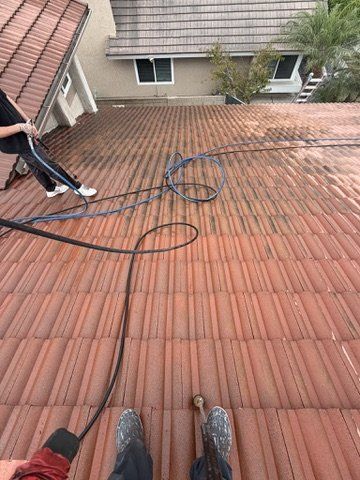
A roof should not be treated like a concrete driveway. Tile roofs need controlled pressure, the right nozzle and careful footing. Careless pressure can crack or shift tiles.
Painted exterior surfaces also deserve careful attention. If paint is already peeling, cracking, or deteriorating, aggressive pressure can make the problem worse.
In situations like these, soft washing or another low-pressure method may be more appropriate.
Can Both Methods Be Used on One Property?
Yes, and this is often the most practical solution.
There is no reason an entire home has to be cleaned with pressure washing or soft washing exclusively.
A professional exterior cleaning plan can use different methods for different surfaces.
For example:
- Pressure washing for a concrete driveway
- Controlled cleaning for sidewalks and patios
- Soft washing for stucco
- A water-only, controlled-pressure wash for tile roofs
- Gentler cleaning around delicate exterior features
This approach focuses on the material instead of the machine.
That distinction matters because a property is rarely made from one type of surface. Most homes combine concrete, stucco, roofing materials, painted trim, windows, masonry, landscaping, and other exterior elements.
Each one may need a slightly different treatment.
What Can Go Wrong With Too Much Pressure?
This is one of the biggest concerns with DIY pressure washing.
A homeowner sees a dirty surface and naturally assumes more pressure will make the job easier. Sometimes it does remove dirt quickly. The problem is what else that pressure may do to the surface.
Excessive pressure can contribute to:
- Surface etching on concrete
- Stripped paint
- Damaged stucco
- Disturbed mortar or joints
- Damage to sensitive roofing materials
- Water intrusion around vulnerable areas
- Uneven cleaning or visible streaking
There is also the issue of organic growth.
If algae, mildew, or other biological buildup is present, pressure alone may not be enough. The surface may look better immediately after cleaning, but simply blasting away the visible growth does not necessarily provide the same result as properly treating the contamination.
That is where the cleaning solution and application process can matter.
Does House Washing Mean Pressure Washing?
Not necessarily.
House washing describes the overall service, not one specific cleaning technique.
A home’s exterior may contain several different materials, including:
- Stucco
- Painted surfaces
- Stone
- Brick
- Concrete
- Trim
- Exterior fixtures
Those materials do not necessarily respond well to the same pressure or cleaning solution.
A professional house-washing service should identify the surfaces involved before deciding how to clean them. This becomes particularly important around windows, doors, landscaping, trim, and areas where several materials meet.
The objective is to clean the home thoroughly while respecting the materials that make up the exterior.
What About Roof Cleaning?
Roof cleaning deserves special consideration because roofing materials can be more vulnerable than concrete.
The right method depends on factors such as:
- Roofing material
- Condition of the roof
- Type of staining
- Organic growth
- Age of the roofing system
- Manufacturer considerations
A tile roof covered with dark streaks or organic growth can be cleaned with pressurized water alone, without chemicals.
The key is control: the right pressure, angle and distance for the tile, so the growth comes off without cracking or lifting tiles. We clean residential tile roofs and commercial TPO flat roofs, not asphalt shingles.
This is one of the clearest examples of why cleaning should be based on the surface rather than the equipment.
How Do You Know Which Method Your Home Needs?
Start by identifying the surface and the problem.
Ask yourself:
Is the surface durable or delicate?
Is the buildup mostly dirt and grime, or is there visible organic growth?
Is the material already damaged or deteriorating?
Does the surface have paint, a coating, or another finish?
Is the area exposed to frequent moisture?
These questions can help determine which cleaning approach makes sense.
For homeowners, the biggest mistake is usually choosing the method first and worrying about the surface afterward.
A better approach is the opposite.
Look at the surface, understand the contamination, then choose the appropriate cleaning process.
Pressure Washing Is Not About Using Maximum Power
A professional pressure-washing job is not a competition to see how much pressure can be applied.
The best results usually come from using enough pressure to clean the surface effectively without going beyond what the material can handle.
That may mean higher pressure for durable concrete and significantly lower pressure for more delicate exterior materials.
It may also mean using a cleaning solution, allowing it time to work, and then rinsing at an appropriate pressure rather than relying entirely on mechanical force.
The same principle applies to equipment selection. A powerful machine does not guarantee a professional result. Technique, surface knowledge, cleaning agents, and experience all play a role.
Which Is Right for Southern California Homes?
There is no single answer because Southern California homes are made from a wide range of materials and face different types of exterior buildup.
Pressure washing is often the right choice for durable surfaces such as suitable concrete driveways, sidewalks, and patios.
Soft washing is generally better suited to more delicate materials and areas where organic growth needs to be treated without aggressive mechanical cleaning.
Many properties need a combination of both.
The smartest approach is to assess each surface individually and use the method that fits the material, contamination, and condition.
That helps achieve a cleaner result while reducing the risk of unnecessary damage.
When you are unsure which method your home needs, a professional assessment is usually a better starting point than simply reaching for the highest setting on a pressure washer.
Related Services From Foothill Pressure Washing
- House washing and soft washing: low-pressure cleaning for stucco, siding and painted surfaces.
- Residential pressure washing: driveways, walkways, patios and other concrete in San Dimas and the San Gabriel Valley.
- Driveway and concrete cleaning: surface-cleaner results without stripes or etching.
- Tile roof cleaning: pressurized water only, no chemicals, with controlled pressure so tiles are not cracked or shifted.
Not sure what your property needs? Request a free estimate or call (909) 323-6122 and we will walk you through it. Foothill Pressure Washing LLC is a licensed contractor (CSLB #1146426) with commercial general liability, commercial auto and workers’ compensation insurance, based in San Dimas.
More from Foothill Pressure Washing
- What Is the Best Way to Clean a Dirty Driveway Before Selling Your Home?
- Why Homeowners Should Pressure Wash Before Installing Holiday Lights
- Pressure Washing Before Painting: Is It Really Necessary?
- Should You Pressure Wash Before Every Season?
- Can Pressure Washing Remove Years of Dirt From Concrete?
- 7 Signs Your Property Needs Professional Pressure Washing
Residential services · Commercial services · Areas we serve · Free estimate