

Pressure washing can make a dirty property look dramatically better, but it is not a case of pointing a powerful wand at every surface and pulling the trigger.
Different materials respond to water pressure in very different ways.
Concrete is generally tough and can handle substantial cleaning pressure when the surface is in good condition. Stucco is more vulnerable. Roof tiles require even more caution because they can crack, chip, shift, or allow water to reach areas that were never meant to be exposed to high-pressure spray.
The good news is that pressure washing itself is not automatically damaging. Problems usually come from using the wrong pressure, technique, nozzle, distance, or cleaning method for the material.
Understanding the difference can help you avoid turning a simple cleaning project into a costly repair.
Can Pressure Washing Damage Stucco?
Yes, stucco can be damaged by improper pressure washing.
Stucco has a textured surface with a cement-based finish that can be more vulnerable to aggressive cleaning than hard concrete. High-pressure water can wear away the surface, create marks, loosen damaged areas, or force water into cracks and openings.
The risk becomes greater when the stucco is already:
- Cracked
- Loose
- Chipped
- Failing around windows or doors
- Showing signs of deterioration
- Covered with a damaged or aging coating
That does not mean stucco cannot be cleaned professionally.
It means the cleaning method needs to be controlled.
For many stucco homes, a lower-pressure approach combined with an appropriate cleaning solution is a better option than relying on force alone. The cleaning solution can help loosen dirt and organic buildup so the surface does not have to endure excessive pressure.
A professional should also pay close attention to windows, vents, electrical fixtures, trim, and other areas where water can enter.
What Happens When Stucco Is Pressure Washed Incorrectly?
The most obvious problem is surface damage.
You may notice:
- Fuzzy or worn areas
- Exposed texture
- Chipped sections
- Discoloration
- Water intrusion
- Uneven cleaning
Another problem is that aggressive pressure may remove more than just dirt.
Stucco finishes can have paint, protective coatings, or other surface treatments. Excessive pressure may disturb those coatings and leave the exterior looking worse than it did before cleaning.
There is also a practical issue. Stucco often contains tiny cracks and openings that are not obvious from the ground. Water under pressure can find those weak points quickly.
That is why cleaning a stucco home requires more judgment than simply selecting a PSI number.
Can Pressure Washing Damage Concrete?
Concrete is much more forgiving than stucco, but yes, it can still be damaged.
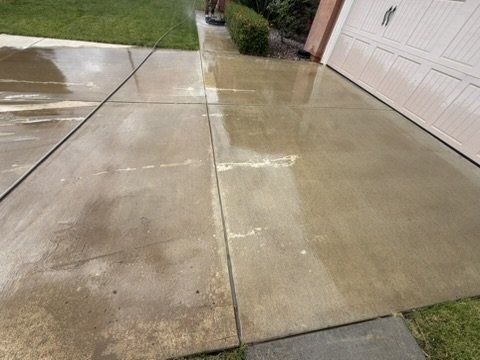
A properly cured, structurally sound concrete driveway or walkway can usually tolerate professional pressure washing. In fact, pressure washing is often one of the most effective ways to remove heavy dirt, grime, tire marks, and other surface buildup.
The problem starts when excessive pressure or the wrong technique is used.
Potential issues include:
- Surface etching
- Visible striping
- Uneven cleaning
- Damage to weak areas
- Removal of surface material
- Damage around cracks and joints
Concrete may look solid, but it is not indestructible.
Older concrete, decorative finishes, exposed aggregate, painted concrete, and deteriorating surfaces require more attention. If the surface is already weak, aggressive cleaning can make existing problems more obvious.
Why PSI Is Not the Whole Story
Homeowners often focus on pressure ratings when comparing pressure washers.
That can be misleading.
A machine with a high PSI rating does not automatically produce a better cleaning result. The actual effect on a surface also depends on the nozzle, distance from the surface, spray angle, water flow, cleaning solution, and the speed at which the operator moves the wand.
For example, holding a nozzle too close to concrete can create an obvious etched or striped appearance.
A professional cleaner is not trying to use the strongest setting possible.
The goal is to use enough cleaning power to remove the buildup without unnecessarily disturbing the surface.
That distinction is especially important when moving between concrete, stucco, painted areas, and other exterior materials during the same job.
Can Pressure Washing Damage Roof Tiles?
Roof tiles deserve even more caution.
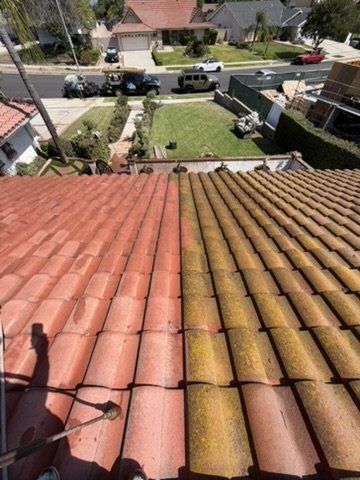
Tile roofs can be made from clay, concrete, or other materials, and their condition varies considerably from one roof to another. Even when the tile itself appears strong, the roof assembly beneath it may contain components that are not designed to withstand aggressive pressure or unnecessary water exposure.
High-pressure cleaning can contribute to:
- Cracked or broken tiles
- Displaced tiles
- Damaged finishes
- Water entering vulnerable areas
- Damage around flashing or seals
- Accelerated wear on older roofing materials
Walking on roof tiles can also create problems, particularly when the tiles are older or already weakened.
For that reason, roof cleaning should not be approached like driveway cleaning.
Does a Tile Roof Need Pressure Washing?
Not necessarily.
On tile roofs, we use pressurized water only, with no chemicals. The pressure, nozzle, angle and distance are controlled for the tile and the type of buildup present.
Algae, moss, mildew and dark organic staining can be removed with water alone when an experienced crew works the roof section by section.
The exact approach depends on the roof.
Clay tile and concrete tile have different characteristics, and even two tile roofs may need a different approach if one is heavily weathered or has damaged sections. Foothill Pressure Washing cleans residential tile roofs and commercial TPO flat roofs, not asphalt shingle roofs.
Before cleaning a roof, it is important to look for cracked tiles, loose pieces, damaged flashing, exposed areas, and other signs that the roof may need attention before washing begins.
What About Concrete Roof Tiles?
Concrete roof tiles can be durable, but durability does not mean they should be cleaned with maximum pressure.
Pressure concentrated on one section can damage weakened or aging tiles. It can also drive water into areas where it may cause trouble.
The condition of the tile matters just as much as the material itself.
A newer, sound roof may tolerate a particular cleaning process that would be inappropriate for an older roof with fragile areas.
This is one reason a professional should evaluate the roof before choosing the cleaning method.
Why Soft Washing Is Often Used on Delicate Surfaces
Soft washing relies more on cleaning solutions and lower water pressure than traditional high-pressure cleaning.
That can make it useful for surfaces where aggressive pressure creates unnecessary risk.
Soft washing may be considered for:
- Stucco
- Painted exterior surfaces
- Delicate siding
- Areas with heavy organic growth
The cleaning solution helps break down contaminants, reducing the need to rely entirely on mechanical force.
This does not mean soft washing is the right answer for every surface either. Concrete with heavy buildup may still benefit from controlled pressure washing.
The important point is that the cleaning method should follow the material and the problem.
How Professionals Decide What Method to Use
A good exterior cleaning process starts with an inspection.
Before cleaning, the technician should consider:
- Surface material
- Age and condition
- Type of staining
- Organic growth
- Existing cracks or damage
- Nearby landscaping
- Windows and other vulnerable features
- Accessibility
- Previous coatings or treatments
That assessment helps determine whether the surface needs pressure washing, soft washing, a combination of methods, or a more cautious approach.
This is especially important on properties where several materials are located close together.
A concrete driveway may need pressure.
The adjacent stucco wall may need low pressure.
The roof may require a completely different process.
Treating all three the same way is where problems begin.
What Homeowners Should Never Do
One of the biggest mistakes is assuming that a pressure washer is safe simply because someone used one successfully on another property.
Avoid:
- Using maximum pressure on every surface
- Holding the nozzle extremely close
- Pressure washing damaged stucco aggressively
- Treating roof tiles like concrete
- Ignoring cracks or loose materials
- Spraying directly into vents or vulnerable openings
- Assuming pressure alone will remove organic growth
- Cleaning without considering nearby plants and exterior fixtures
A pressure washer is a powerful piece of equipment. The result depends heavily on how it is used.
When Professional Pressure Washing Makes Sense
Professional cleaning becomes particularly valuable when your property has multiple surface types or when you are unsure which method is appropriate.
A professional can identify surfaces that need a stronger cleaning approach and areas that require a gentler treatment.
That can help prevent unnecessary damage while still giving the property the deeper clean you are looking for.
For Southern California homes, this matters because one property may have concrete driveways, stucco walls, tile roofing, decorative masonry, painted trim, patios, and landscaping all within a few feet of each other.
There is no reason to treat them all the same.
The Right Pressure Is the One That Gets the Job Done Safely
Pressure washing is not inherently harmful to stucco, concrete, or roof tiles.
Improper pressure washing is.
Concrete can often handle controlled pressure very well. Stucco needs more care. Roof tiles require careful consideration of the material, condition, and appropriate cleaning method.
The best approach is to inspect the surface first, identify what is actually causing the buildup, and then choose the cleaning technique that provides the needed results without unnecessary force.
A clean property should look better when the job is finished, not come with a repair bill attached to it.
Related Services From Foothill Pressure Washing
- House washing and soft washing: low-pressure cleaning for stucco, siding and painted surfaces.
- Driveway and concrete cleaning: surface-cleaner results without stripes or etching.
- Tile roof cleaning: pressurized water only, no chemicals, with controlled pressure so tiles are not cracked or shifted.
- Exterior wall and fence cleaning: block walls, stucco walls and fences.
Not sure what your property needs? Request a free estimate or call (909) 323-6122 and we will walk you through it. Foothill Pressure Washing LLC is a licensed contractor (CSLB #1146426) with commercial general liability, commercial auto and workers’ compensation insurance, based in San Dimas.
More from Foothill Pressure Washing
- How Often Should Commercial Properties Be Pressure Washed in Southern California?
- Pressure Washing vs Soft Washing: Which Is Right for Southern California Homes?
- What Is the Best Way to Clean a Dirty Driveway Before Selling Your Home?
- Why Homeowners Should Pressure Wash Before Installing Holiday Lights
- Pressure Washing Before Painting: Is It Really Necessary?
- Should You Pressure Wash Before Every Season?
Residential services · Commercial services · Areas we serve · Free estimate